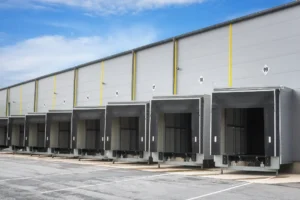
In today’s interconnected marketplace, warehousing is no longer just about storage; it’s the pulsating heart of efficient supply chains. From bustling metros to developing towns, warehousing in India is experiencing a period of unprecedented transformation. Driven by evolving consumer demands, relentless technological advancements, and the ever-shifting dynamics of the global market, the sector is undergoing a significant metamorphosis.
For Indian businesses navigating this dynamic terrain, understanding the key trends and innovations is no longer a matter of choice – it’s a strategic imperative. This article delves into the most significant forces reshaping warehousing in 2024 and beyond, offering valuable insights for Indian organisations to not just keep pace, but to gain a competitive edge in this evolving landscape.
E-commerce Boom: Reshaping Warehousing Demands
The relentless surge of e-commerce in India has fundamentally altered warehousing requirements. The digital revolution has empowered consumers across the nation, leading to an explosive growth in online retail. Indian consumers, increasingly accustomed to the speed and convenience of online shopping, now expect lightning-fast deliveries and seamless order fulfillment. This demand has placed immense pressure on warehousing operations to become more agile, responsive, and geographically distributed.
The rise of omnichannel retail further complicates warehousing, necessitating integrated systems capable of handling both online orders and traditional retail distribution channels. Warehouses must now seamlessly manage inventory for both brick-and-mortar stores and online marketplaces, requiring sophisticated inventory management and order processing capabilities. Efficient last-mile delivery, particularly challenging in India’s diverse and often congested urban and rural landscapes, becomes paramount. Warehousing, therefore, is no longer simply about bulk storage; it’s a critical node in a complex network designed for speed, precision, and customer satisfaction in the age of e-commerce.
Automation Revolution: Enhancing Warehouse Operations
To meet these escalating demands and navigate operational challenges, warehouse automation is no longer a luxury, but a necessity. The increasing complexity of modern supply chains, coupled with the need for faster throughput and greater accuracy, has made manual warehousing processes increasingly unsustainable. Automation offers a powerful solution, driving efficiency gains and transforming warehouse operations from end to end.
Robotics, including Automated Guided Vehicles (AGVs) navigating warehouse floors and robotic arms performing intricate picking tasks, are becoming increasingly commonplace. Automated Storage and Retrieval Systems (AS/RS) that maximise vertical space and drastically accelerate retrieval times are revolutionising storage and retrieval processes. Sophisticated conveyor systems and automated sorting technologies further optimise material flow within the warehouse, reducing manual handling and accelerating order processing. The benefits are manifold: enhanced operational efficiency, near-perfect order accuracy, reduced reliance on manual labour, increased throughput, and the possibility of round-the-clock operations. In the Indian context, where labour availability and costs can be fluctuating factors, automation offers a crucial advantage in ensuring consistent and predictable operational performance.
Cold Chain Evolution: The Rise of Temperature-Controlled Warehousing
Beyond general warehousing, the demand for temperature-controlled facilities is experiencing a significant upswing, particularly in India. The evolving needs of several key sectors are driving this growth, making cold chain warehousing a critical area of focus. The pharmaceutical sector, with its stringent requirements for drug storage and distribution, is a major driver, demanding precise temperature and humidity control to maintain the efficacy and safety of medicines. The burgeoning food and beverage industry, striving to maintain the freshness and safety of perishable goods across India’s varied climate zones, is another key factor. Speciality chemicals and other temperature-sensitive materials also contribute to this growing demand, further emphasizing the need for specialized temperature-controlled warehousing solutions.
Advanced technology is paramount in cold chain warehousing, ensuring precise temperature and humidity control, robust monitoring systems, and adherence to stringent regulatory standards. Real-time temperature monitoring, data logging, and alarm systems are crucial for maintaining product integrity and compliance. In a country like India, where food wastage remains a significant concern, robust cold chain infrastructure is crucial for preserving perishable goods and ensuring food security, alongside supporting the growth of vital industries like pharmaceuticals and specialized chemicals.
Green Warehousing: Sustainability as a Core Imperative
Sustainability is no longer a peripheral concern, but a core imperative for businesses worldwide, and the warehousing sector is no exception. With increasing environmental awareness and growing pressure to reduce carbon footprints, sustainable or “green” warehousing practices are rapidly gaining traction in India and globally. Businesses are increasingly seeking warehousing solutions that minimise environmental impact and contribute to broader sustainability goals.
Implementing energy-efficient LED lighting systems and HVAC (Heating, Ventilation, and Air Conditioning) systems, and optimising warehouse design for natural light and ventilation are becoming standard practices. Embracing renewable energy sources, such as installing solar panels on expansive warehouse roofs, is gaining momentum. Comprehensive waste reduction and recycling programmes to minimise environmental impact are also becoming essential components of responsible warehouse operations. Seeking green building certifications like LEED to validate and demonstrate sustainability efforts provides further credibility and market differentiation. The benefits of sustainable warehousing extend beyond environmental responsibility, encompassing cost savings through reduced energy consumption, enhanced brand reputation, and attracting environmentally conscious clientele. Aligning with India’s growing commitment to environmental sustainability and national goals for a greener economy, sustainable warehousing practices are becoming increasingly crucial for long-term business viability and responsible corporate citizenship.
Data-Driven Warehousing: Leveraging Analytics for Enhanced Visibility
The digital revolution has ushered in a new era of data-driven decision-making, and warehousing is at the forefront of this transformation. Gone are the days of relying on manual processes and guesswork in warehouse management. Today, data analytics and real-time visibility are transforming warehouse operations, empowering businesses to optimize efficiency, improve decision-making, and gain a competitive advantage.
Warehouse Management Systems (WMS) and other sophisticated technologies are now essential tools for capturing and analysing vast datasets generated within warehouse operations. These systems provide invaluable insights into inventory movement, order patterns, space utilisation, and overall warehouse performance. Data analytics empowers warehouse managers to achieve: optimised inventory management, ensuring the right stock levels are maintained, minimising both stockouts and costly overstocking; enhanced warehouse space utilisation through data-driven insights into storage patterns and flow; and data-driven decision-making, enabling warehouse managers to identify bottlenecks, optimise processes, and plan strategically for future growth. Real-time visibility across the entire warehousing operation, providing managers with up-to-the-minute insights into inventory levels, order status, and overall performance, is becoming indispensable for agile and responsive supply chain management. As Indian businesses increasingly embrace digital transformation, data-driven warehousing is becoming a key differentiator for competitive advantage in the modern marketplace.
Conclusion: Navigating the Future of Warehousing with KFPCL Warehouse
In conclusion, the warehousing landscape is undergoing a rapid and exciting evolution, driven by the forces of e-commerce, automation, cold chain demands, sustainability imperatives, and the power of data analytics. These trends present both challenges and opportunities for Indian businesses. To remain competitive and efficient in this evolving landscape, embracing these trends and innovations is not merely an option, but a strategic necessity.
KFPCL Warehouse is well-positioned to partner with Indian businesses on this journey, offering state-of-the-art warehousing and allied services designed to meet the challenges and opportunities of the modern logistics landscape. We are committed to providing innovative, technology-driven, and sustainable warehousing solutions that empower your business for future success.
To explore how KFPCL Warehouse can help your business leverage these warehousing trends and innovations, visit our [link to Warehousing & Allied Services page] Warehousing & Allied Services page or contact us today for a consultation. Let us help you build a future-proof warehousing strategy and unlock the full potential of your supply chain.